
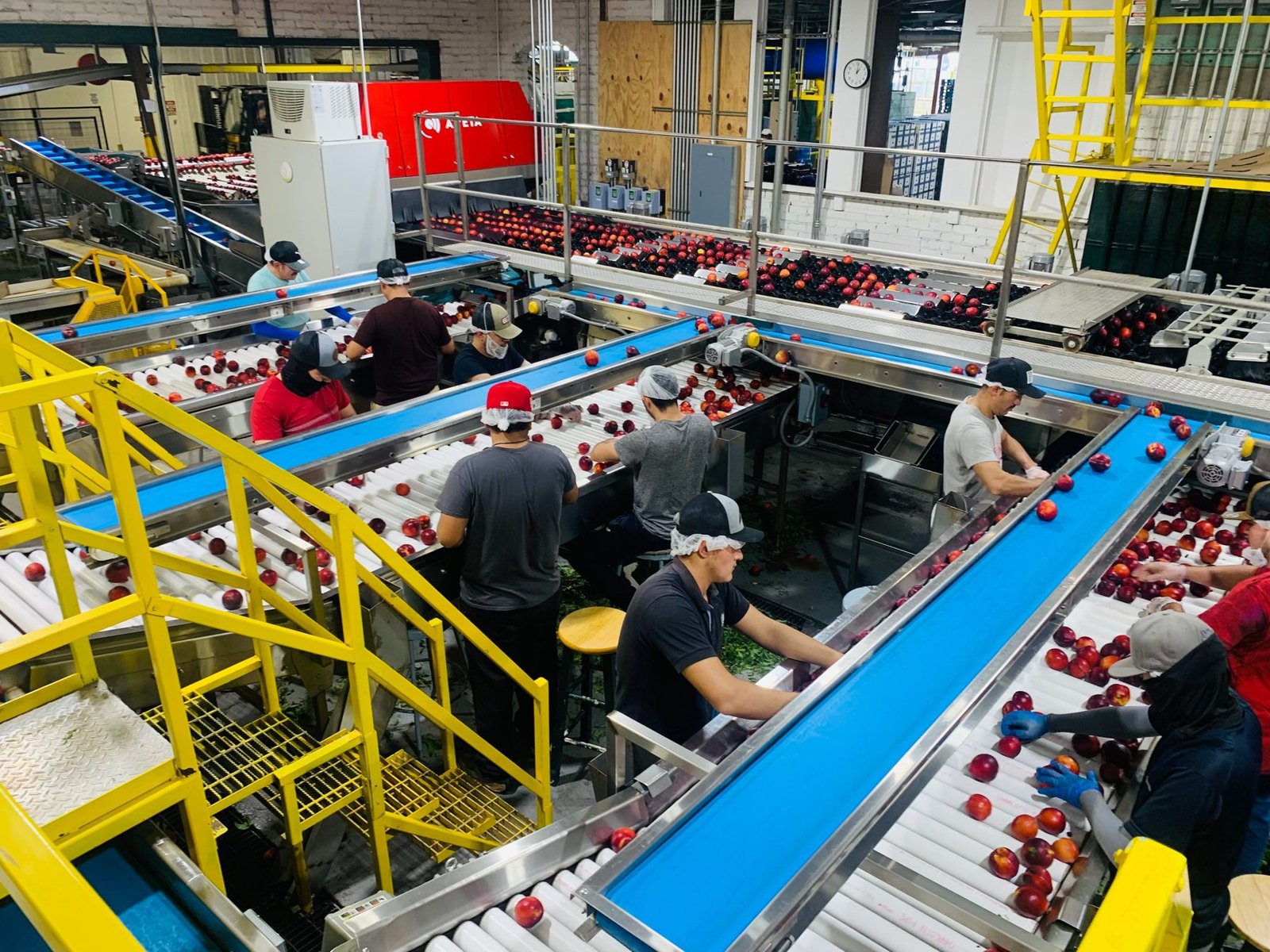
Application-oriented belt technology
Synthetic belts combine dimensional stability, low noise and flexible construction. Depending on the compound and surface, they can be configured for packaging, logistics, food handling, inspection or process conveyors.
Technical overview
| Materials | PVC / PU |
|---|---|
| Typical duty | Light / medium |
| Surfaces | Smooth / structured |
| Profiles | Cleats / guides / sidewalls |
Typical applications
Construction
Synthetic belts combine one or more fabric layers with PVC or PU coatings. Their surfaces can be smooth, matt, glossy or patterned and can be fabricated with cleats, profiles, sidewalls and tracking guides.
Operating Properties
They offer stable tracking, low mass, flexible fabrication and low-noise operation. Depending on the compound, they can be selected for logistics, packaging, food processing, inspection and assembly applications.
Selection Criteria
Key selection factors include pulley diameter, belt speed, product temperature, cleaning method, accumulation behavior, friction requirement and whether the belt must meet food-contact or antistatic requirements.
Application engineering matters
Final belt selection should always be verified against the real conveyor geometry, tension calculation, material characteristics, duty cycle and environmental exposure.